A dining room that shows from nearly every spot on your first floor has a lot of work to do. If the furniture looks tired, the whole level feels tired with it. The good news: you may not need to replace anything. Apartment Therapy recently featured a dining room where one DIY update changed how dated furniture looked and helped the space feel more intentional. Per the outlet, the room is visible from almost every point on the first floor, so the design had to pack a punch.
The full details of that project aren't something I can lay out here, so I won't guess at the exact materials or steps. What the story does show is a strategy you can use: pick one change, aim it at the furniture, and let it carry the room. Here's how to choose yours and do it well.
Why one change beats a full redo
When a room looks dated, the instinct is to fix everything at once: new table, new chairs, new rug, new lighting. That gets expensive and tends to produce a room with no clear point of view.
One well-chosen update works differently. It gives the eye a single new thing to register, and the rest of the room reads as fresher by association. It also keeps the budget low, which is a big part of why makeovers like this resonate with homeowners who want impact without replacing major pieces.
Find the one thing that dates the room
Before you buy a can of anything, stand in the doorway and ask what makes the furniture look old. Usually it's one of a few culprits:
- Finish: a color or tone that feels stuck in another era, such as heavy orange-toned wood or a glossy, worn coat.
- Upholstery: chair seats with faded, stained, or busy fabric.
- Styling: a bare or cluttered table, or pieces arranged without any plan.
The update you choose should match the culprit. Paint or stain addresses finish. New fabric addresses seats. A restyle addresses the way everything is presented. Fixing the wrong thing is the most common reason a DIY falls flat.
Match the DIY to the problem
If the finish feels dated: paint or stain
Refinishing the table, chairs, or a buffet is often the biggest visual change for the least money. Clean and lightly sand the surface, apply the right primer or stain prep for the material, then finish with a durable topcoat, since dining tables take daily wear. Test on a hidden spot first so you know how the color looks in your light.
If the seats look worn: reupholster
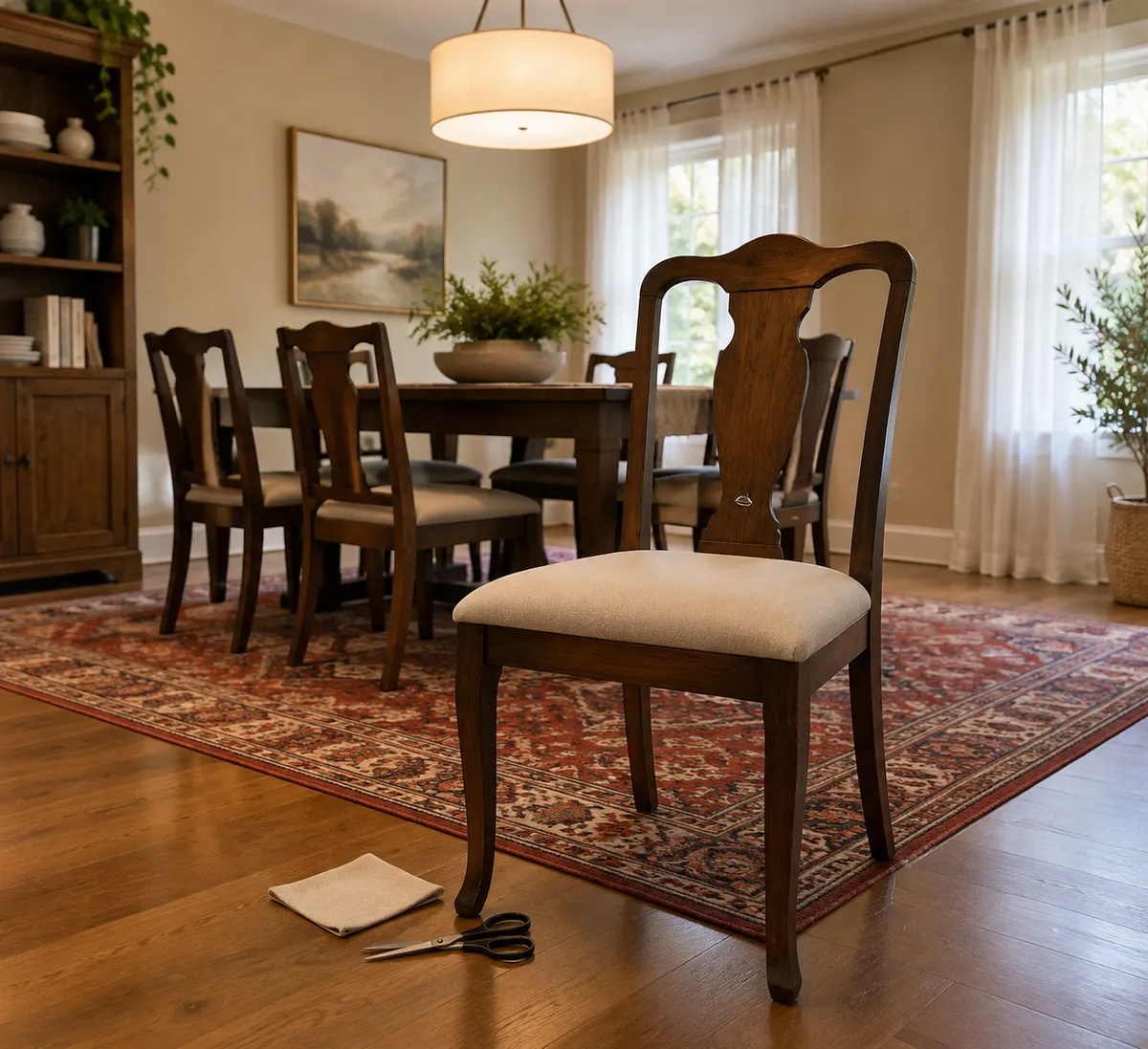
Drop-in chair seats are among the easiest upholstery jobs. Unscrew the seat, remove the old fabric, replace padding if it's flat, and staple new fabric tight across the back. Choose something that wipes clean or hides crumbs if you eat here often.
If the pieces are fine but flat: restyle
Sometimes furniture isn't dated, it's just undressed. A runner, a simple centerpiece, and a few considered accents can make the same set feel current. This is the lowest-commitment option, so start here if you're unsure.
Design for a room you can see from everywhere
Open layouts raise the stakes. If your dining room is visible from the kitchen, living room, and entry, treat it as part of the whole floor rather than a separate space.
- Check the sightlines. Walk through the first floor and note what you see of the dining room from each spot. That's the view you're designing.
- Echo your colors. Pull one shade from the adjoining rooms into your update so the spaces feel connected.
- Pick a focal point. One bold element, whether a refinished table or a striking chair fabric, is stronger than five small tweaks.
- Keep the surfaces calm. In an open plan, clutter on the table is visible everywhere. Edit it down.
A simple plan for a weekend
- Photograph the room from two or three spots you see it most.
- Name the single thing that looks most dated.
- Choose the matching DIY from above and buy only what it needs.
- Test your finish or fabric on a small, hidden area.
- Do the work, let everything cure fully, then style the table.
- Take new photos from the same spots and compare.
That last step matters. Before-and-after photos show you what actually changed, and they tell you whether the room needs a second small tweak or is done.
Know when to stop
The appeal of a one-change makeover is restraint. If the update works, resist adding more just because you have momentum. A room that feels intentional usually has one clear idea running through it, and your dated furniture may only have needed that idea.
So before you shop for a new set, spend a weekend on the one thing that's holding the old one back.