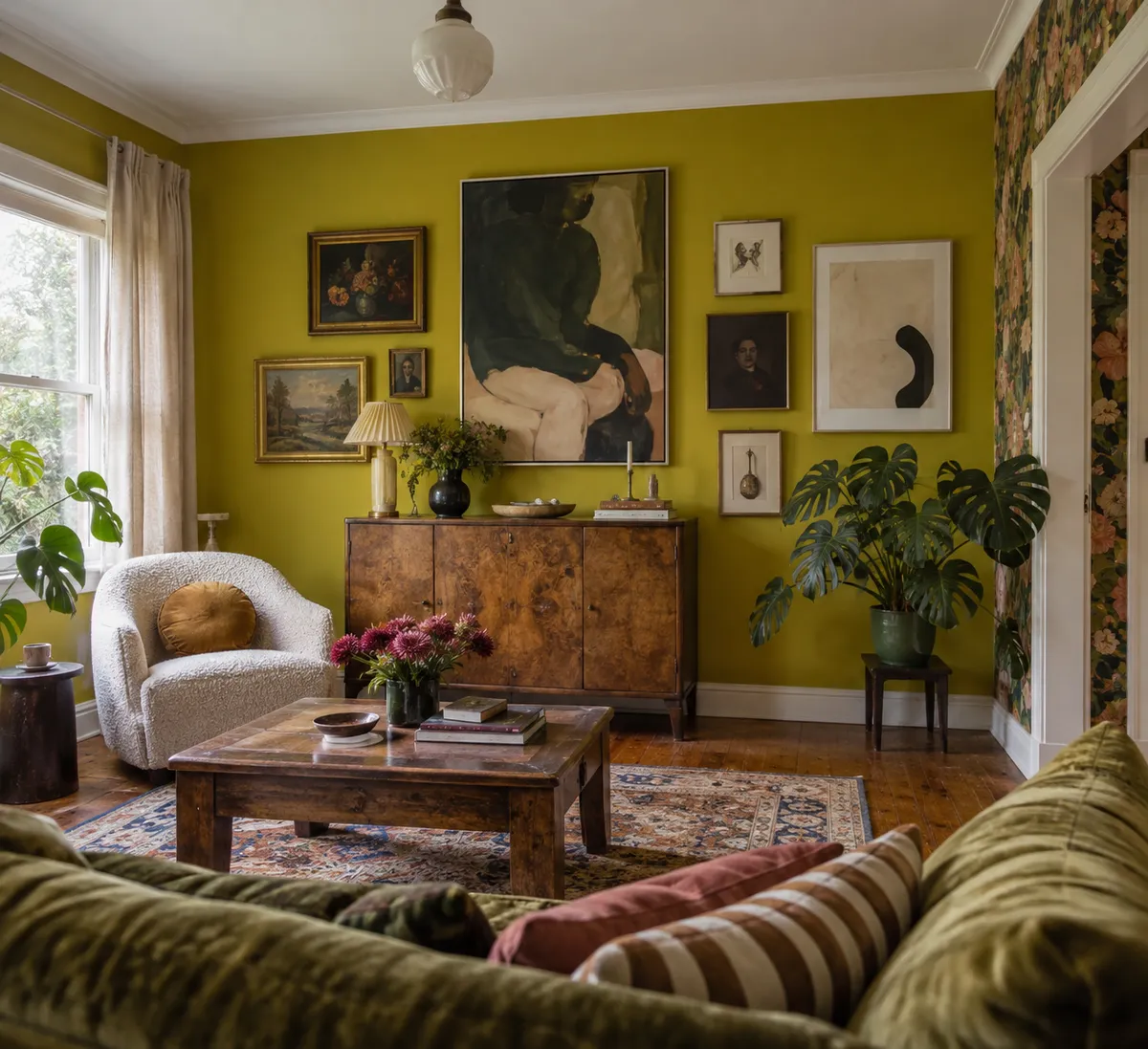
A plain 1990s semi doesn't need a knock-down to become a home with soul. Interior designer Alexandra Brownlow shows how: her Melbourne townhouse, featured by Homestolove, went from bland to richly layered through colour, pattern, antiques and art. Below are the lessons you can borrow, whatever your budget or floor plan.
Start With What You Have, Not What You'd Demolish
Per Homestolove, Brownlow's home began as a characterless 1990s semi. Rather than treat it as a problem to be ripped out, the story is one of transformation through decoration. The approach is worth copying: before you price up a renovation, ask how far surface-level choices can take a room.
Those choices are the cheapest, most reversible tools you own:
- Paint
- Wallpaper
- Art
- Furniture and objects you already love
Living with a room dressed boldly for a few months will tell you far more about what it needs than a floor plan will.
Use Colour to Set the Atmosphere
Maximalism, as this home shows, isn't about piling things up at random. Colour does the heavy lifting by establishing a mood before a single object arrives. Chartreuse is among the standout shades in the home's palette, a vivid, slightly unexpected choice that proves a bland room can be woken up by committing to a strong hue.
A few ways to try this yourself:
- Pick one room to be brave in. A snug, hallway or study is a lower-stakes place to experiment than your main living space.
- Test big swatches. Paint large samples and look at them morning and evening before you commit.
- Let colour carry the room. If the walls are bold, the furnishings can be more varied without feeling chaotic.
Let Wallpaper Do the Work of Architecture
A 1990s semi often lacks the cornices, panelling and quirks that give older houses character. Statement wallpaper is a quick way to fake that depth. Pattern adds the visual richness you'd expect from a historic home, and it does it in a weekend rather than a renovation.
If you're nervous, start small: one feature wall, the inside of a wardrobe, a powder room or a stairwell. Small spaces tolerate big patterns well, and they make a confident first step.
Build an Art Wall That Feels Collected
Contemporary art is central to this house, sitting alongside the antiques and country-house references. An art-filled wall gives a plain room a point of view instantly.
To make yours feel gathered over time rather than bought in one go:
- Mix sizes and frames rather than matching sets.
- Hang pieces closer together than feels natural, so they read as one composition.
- Include things that mean something to you, not only what suits the colour scheme.
Mix Antiques With the Contemporary
The heart of the look, per Homestolove, is English country-house charm meeting colourful maximalism. That means old pieces sit comfortably beside modern art. The contrast is what keeps a traditional reference from feeling like a costume.
A practical way to start: choose one antique with presence, such as a wooden chest, a traditional armchair or a decorative mirror, and put it in a room dominated by modern art or a bold wall colour. Let the two argue a little. The friction is the point.
Bring English Country-House Style Into the City
You don't need a manor to borrow its spirit. The country-house idea here isn't about size, it's about layering: heritage pieces, pattern, and a sense that the room has evolved rather than been staged. In a city townhouse, that translates to rooms that feel storied and personal, a retreat from the outside world.
The takeaway is attitude. Treat your rooms as places where objects accumulate meaning, and resist the urge to clear every surface for a catalogue look.
Why This Approach Is Catching On
It's hard not to see this home as part of a wider reaction against minimalist, beige interiors. Many homeowners are leaning toward personality, heritage and collected objects, and rooms that feel emotional rather than neutral. That's our read, not a verdict from the designer, but Brownlow's townhouse is a clear example of the appetite.
Maximalism also forgives imperfection. A collection grows slowly, so you can buy one good piece at a time without needing a complete plan.
Your First Weekend Plan
If you want to try this without committing to a big project:
- Choose one small room.
- Paint it, or wallpaper it, in a colour or pattern you slightly fear.
- Hang art you love, grouped tightly.
- Add one antique or inherited piece.
- Live with it for a month before changing anything.
The lesson of this Melbourne semi is simple: decorate boldly first, and you may find the demolition was never needed.